
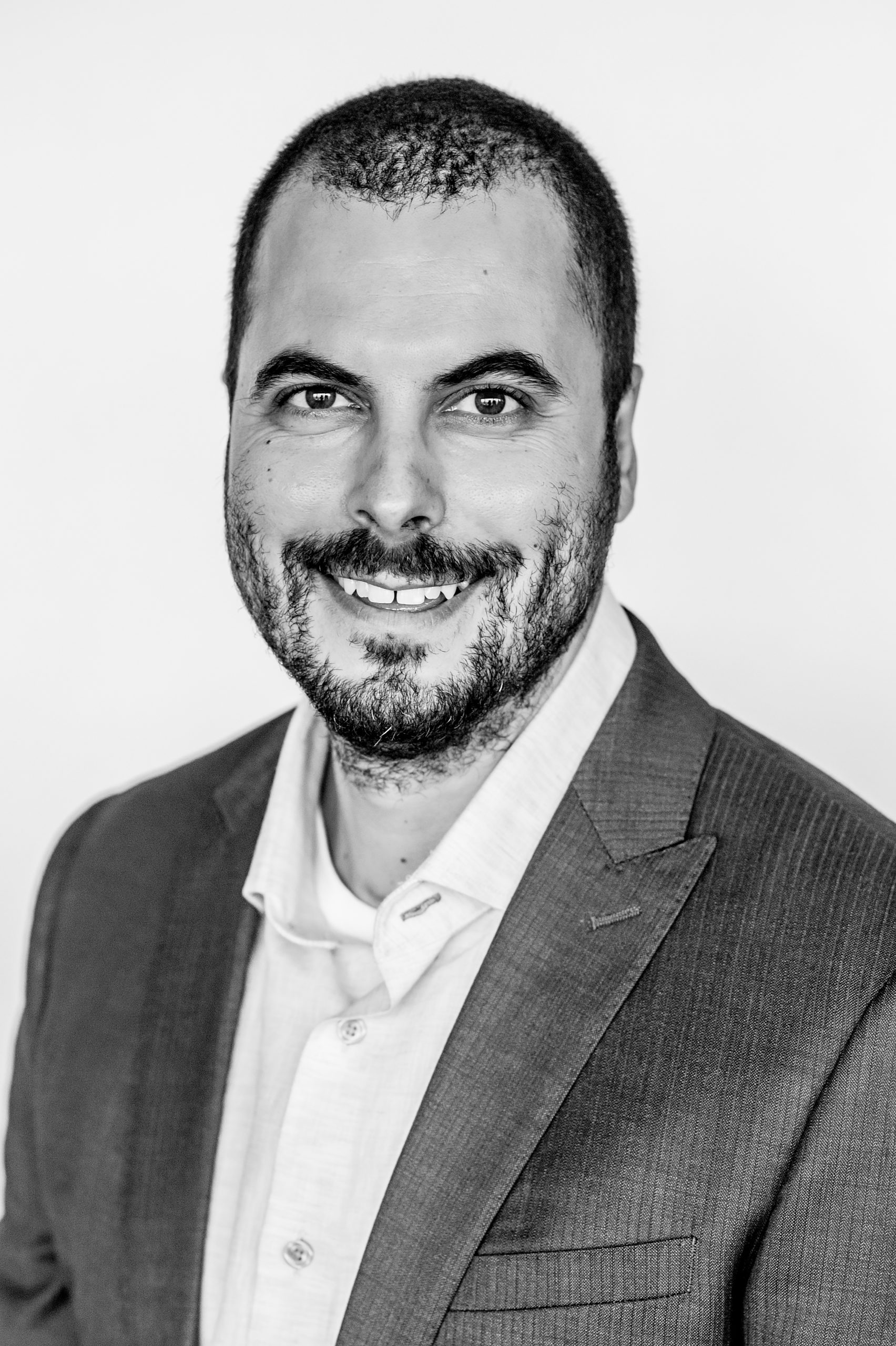
Frédérik Chenard
Co-President and
Co-Owner
Building What Lasts
Spend a little time with Frederik Chenard and a pattern emerges quickly. He is not drawn to noise, urgency theatre, or short-lived wins. His instinct is to slow things down just enough to see what will actually hold. His leadership is practical, restrained, and rooted in the long term. He is interested in building structures that endure. Companies, systems, and relationships that do not crack under pressure.
That posture has quietly shaped Postech Screw Piles over the years.
When asked to describe the company’s future in a single word, Frederik answers without hesitation: prosperous. He is also quick to define what that means to him.
“For me, prosperity isn’t about numbers alone,” he says. “It only works if it’s shared. Dealers, employees, partners. The entire network has to benefit, otherwise it doesn’t last.”
It is a revealing distinction. Prosperity, in his view, is not something extracted. It is something distributed.
You can feel that mindset when stepping into Postech’s head office. There is no excess, no performance for effect. The space does not try to impress. Instead, it reassures. It reflects a company that knows where it is going and does not feel the need to announce it loudly. The clarity is intentional. The calm is earned.
“We want people to feel reassured when they’re here,” Frederik explains. “That they’re walking into something solid. Structured. Dependable. But never rigid.”
That final nuance matters.
Flexibility sits at the centre of how Postech operates, even as the company continues to grow. In an industry shaped by unpredictable soil conditions, harsh climates, regulations, and evolving site constraints, rigidity is not a principle. It is a limitation. At Postech, flexibility applies just as much to people as it does to products. Teams are trusted to think and adjust. Franchisees are encouraged to adapt to their local realities. Clients are listened to, rather than pushed into predefined solutions that look good on paper but fail in the field.
“Flexibility isn’t a slogan for us,” Frederik says. “It’s how you survive in this industry.”
That philosophy did not come from theory or boardroom exercises. It came from years of listening to installers, franchisees, and clients doing the work on the ground.
Over time, one lesson kept repeating itself. Relationships are everything. Markets shift. Projects come and go. Technical challenges evolve. But trust, built through consistency and honesty, is what turns a transaction into a partnership. It is what keeps people aligned when conditions get difficult. That belief now informs leadership decisions across Postech, often quietly, always deliberately.
Innovation follows the same logic.
Engineering excellence matters. Efficient operations matters But Frederik is clear that Postech’s most powerful growth engine has always been its entrepreneurial network. From the beginning, the company was designed to travel beyond regions, beyond borders, and beyond the traditional assumptions of where screw piles could be used and who could use them successfully.
“Our growth didn’t come from products alone,” he notes. “It came from people who believed in the model and took ownership of it in their markets.”
Some of Postech’s most meaningful advances emerged not from ambition, but from constraint.
The production of larger piles is one such example. Early on, the company simply was not equipped to manufacture them efficiently. The challenge was technical, operational, and costly. It could have remained a limitation. Instead, it forced Postech to rethink processes, invest differently, and push capabilities further than initially planned. What began as a pressure point became a competitive advantage.
“That difficulty forced us to improve,” Frederik says. “Today, the ability to manufacture a wide range of pile sizes and adapt to specific project needs is a major driver of our growth.”
For all the strategy, systems, and scale involved, the moments that resonate most with him remain deeply human.
Each year, the annual meetings bring that into focus. They are demanding. Intensive. Filled with information, planning, and difficult conversations. But they also bring the entire network into one room. People replace charts. Conversations replace metrics.
“That’s when you really understand why we’re doing this,” Frederik reflects. “You see the progress. You see the commitment. You see where everyone is headed, together.”
Perspective, he says, also depends on knowing when to step away.
Travel. Time outdoors. New experiences with family. These moments create distance from day-to-day operations and offer something leadership rarely allows itself: pause. They are not distractions from the work. They are what keep decisions grounded in reality.
Measurement, however, remains non-negotiable.
“One principle guides a lot of what we do,” he adds. “You can’t improve what you don’t measure.”
At Postech, data does not replace instinct. It sharpens it. Measurement brings clarity. Clarity enables better decisions. Better decisions create momentum that lasts.
It is that balance between structure and flexibility, data and relationships, ambition and restraint that defines Frederik Chenard’s leadership.
At Postech Screw Piles, foundations are not only installed in the ground. They are built into how the company leads, adapts, and grows. Quietly. Deliberately. With a clear understanding that the strongest things are rarely the loudest, but they are always the ones that hold.

Postech Screw Piles is a Canadian company specializing in the manufacturing, distribution and installation of galvanized steel screw piles for residential and light commercial projects.

©2026 Pieux Vistech, Sherbrooke, Quebec, Canada.