
Winter and Construction: an Underrated Match
Rethinking the idea that winter brings everything to a halt
Every year, as soon as the first real cold sets in, it’s expected that job sites will slow down or shut entirely. For decades, that pause felt unavoidable: concrete stopped behaving, excavation became difficult, and frozen ground turned into a barrier no one wanted to fight. This assumption, deeply rooted in construction culture, reflected a time when foundation methods were dictated almost entirely by weather limitations.
That’s no longer the case. The adoption of modern screw pile foundations has reshaped the relationship between construction and climate. Unlike traditional concrete footings, a screw pile can be installed mechanically beneath the frost line, into a layer of soil that remains stable throughout the year. This technical shift opened the door to something once unthinkable: moving a project forward even while the landscape is covered in snow.
Frozen ground: problem or unexpected asset?
In most people’s minds, frozen soil is a challenge. On site, however, it often behaves like an ally. Frozen ground is typically firmer, cleaner, and far less muddy than a springtime surface saturated with runoff. It responds better to equipment, holds its structure, and creates a more predictable working environment.
That stability allows screw piles to be installed with precision, without the heavy disruption associated with traditional excavation. Winter, far from being a barrier, can actually set the stage for efficient, controlled work.
Soil movement and the role of Thermal Piles®
Understanding the freeze–thaw cycle
Even though screw piles bypass the challenges of concrete, another reality remains: freeze–thaw cycles cause soil to shift. In colder regions, these movements can influence how a foundation behaves over time.
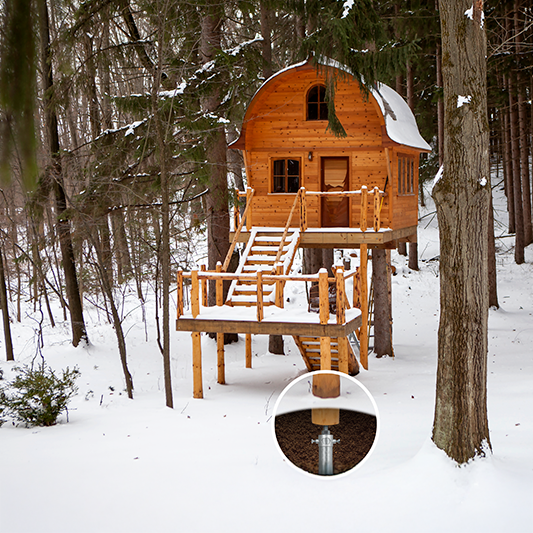

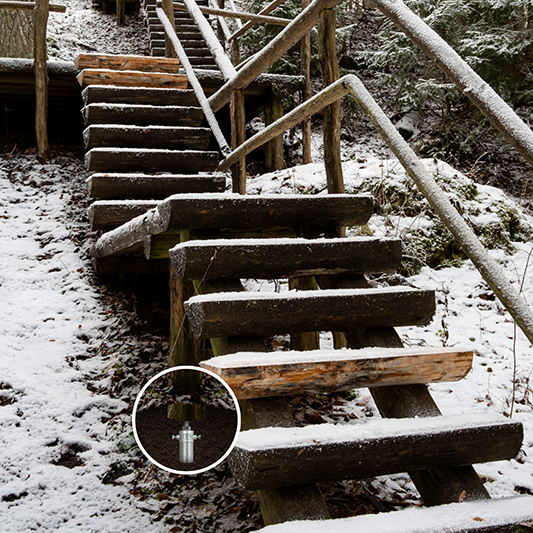
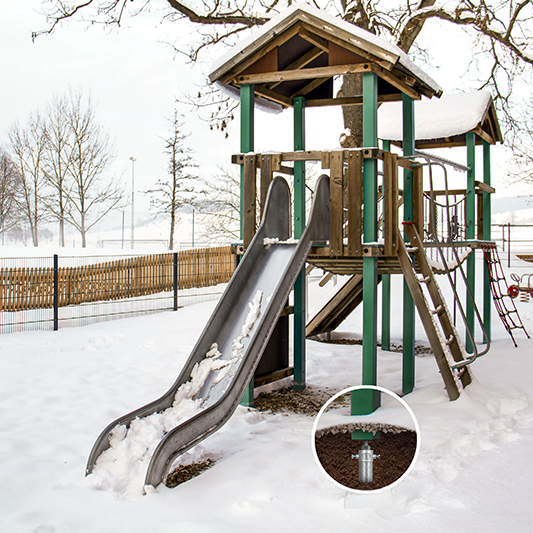
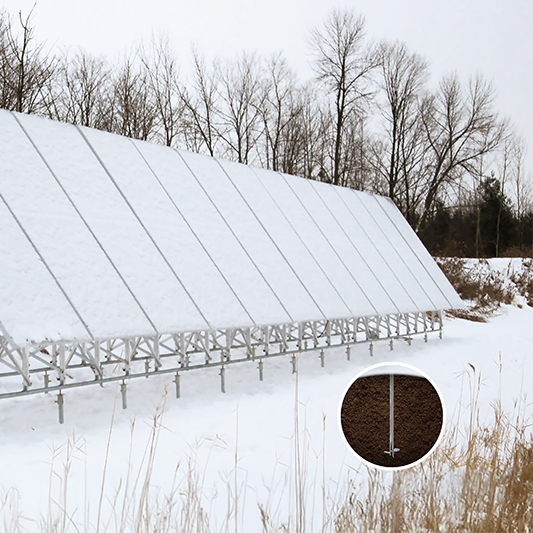
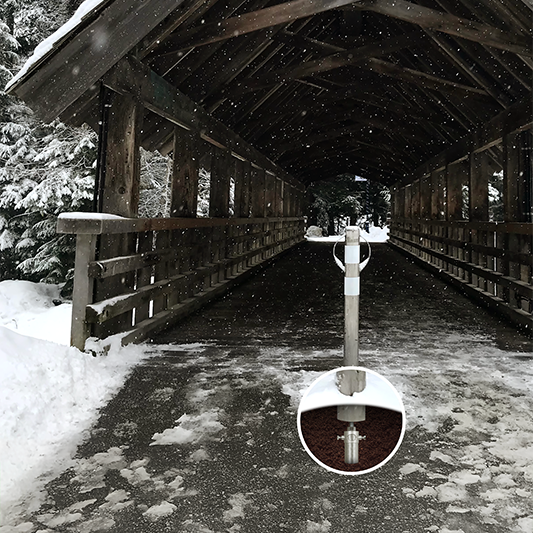
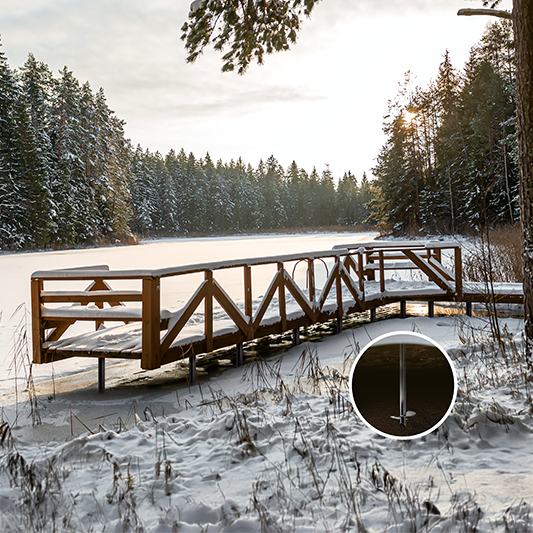
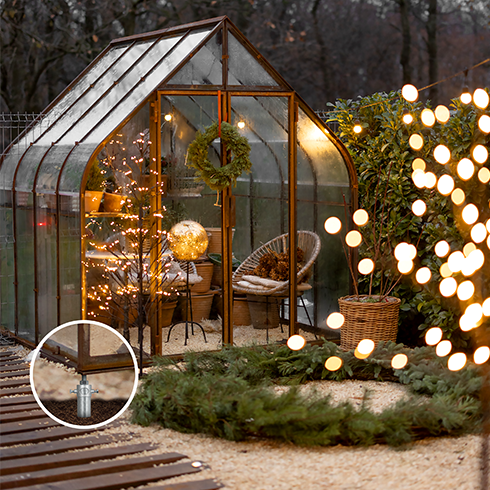
The technical solution: Thermal Piles®
Thermal Piles® were designed precisely to address this issue. By integrating an internal insulating system, they help stabilize the temperature of the soil surrounding the pile. This reduces frost transfer, limits ground movement, and improves long-term stability in harsh winter climates.
It’s not a solution required for every project, but in locations where deep cold persists for long stretches, it becomes a significant advantage.
When winter becomes a strategic advantage
Low-season work comes with benefits many don’t initially consider. Crews are often more available, administrative timelines tend to be shorter, and coordination is smoother than during the rush of spring.
When a foundation is installed in winter, the project starts the warm season with a head start. While others are just beginning their first excavation, a winter-prepared site can already move into the framing stage. The gain isn’t minor—this shift can redefine an entire project schedule.
If you want to see how these foundations are used in real conditions, explore residential and commercial screw pile applications on our site.
Why preparation matters
Building in winter isn’t simply “summer work with gloves on.” It requires a solid understanding of soil conditions, load requirements, and technical planning. Many screw-pile projects are backed by engineering validation to ensure that each foundation meets expected performance standards.
That groundwork is what keeps a winter installation efficient, safe, and durable despite the climate.
Dispelling the myths: what the evidence actually shows
“Frozen ground can’t be penetrated.”
Modern hydraulic equipment drills through frozen layers with ease.
“Winter installations are less durable.”
Durability depends on soil and depth—not outside temperature.
“Winter always costs more.”
Often the opposite is true: less waiting, less competition, smoother scheduling.
A new way to think about building season
Thermal Piles® and cold-weather screw pile technology have changed the reality of building in northern climates. Winter is no longer synonymous with shutdowns; it’s a workable window where projects can advance with precision and consistency.
To learn more about how these foundations perform in all seasons, you can explore how screw piles work.
This shift has reshaped how construction interacts with weather. We’re no longer building despite winter—we’re building with it, by understanding its constraints and taking advantage of the predictability it can offer.
The result? More flexible schedules, better-managed job sites, and the ability to build year-round without compromising the stability of a foundation.

Postech Screw Piles is a Canadian company specializing in the manufacturing, distribution and installation of galvanized steel screw piles for residential and light commercial projects.

©2026 Pieux Vistech, Sherbrooke, Quebec, Canada.