Screw piles are designed for minimal soil disruption and reduced labor. However, several challenges can arise during installation. This article outlines common issues and how they can be addressed effectively.
Encountering large rocks
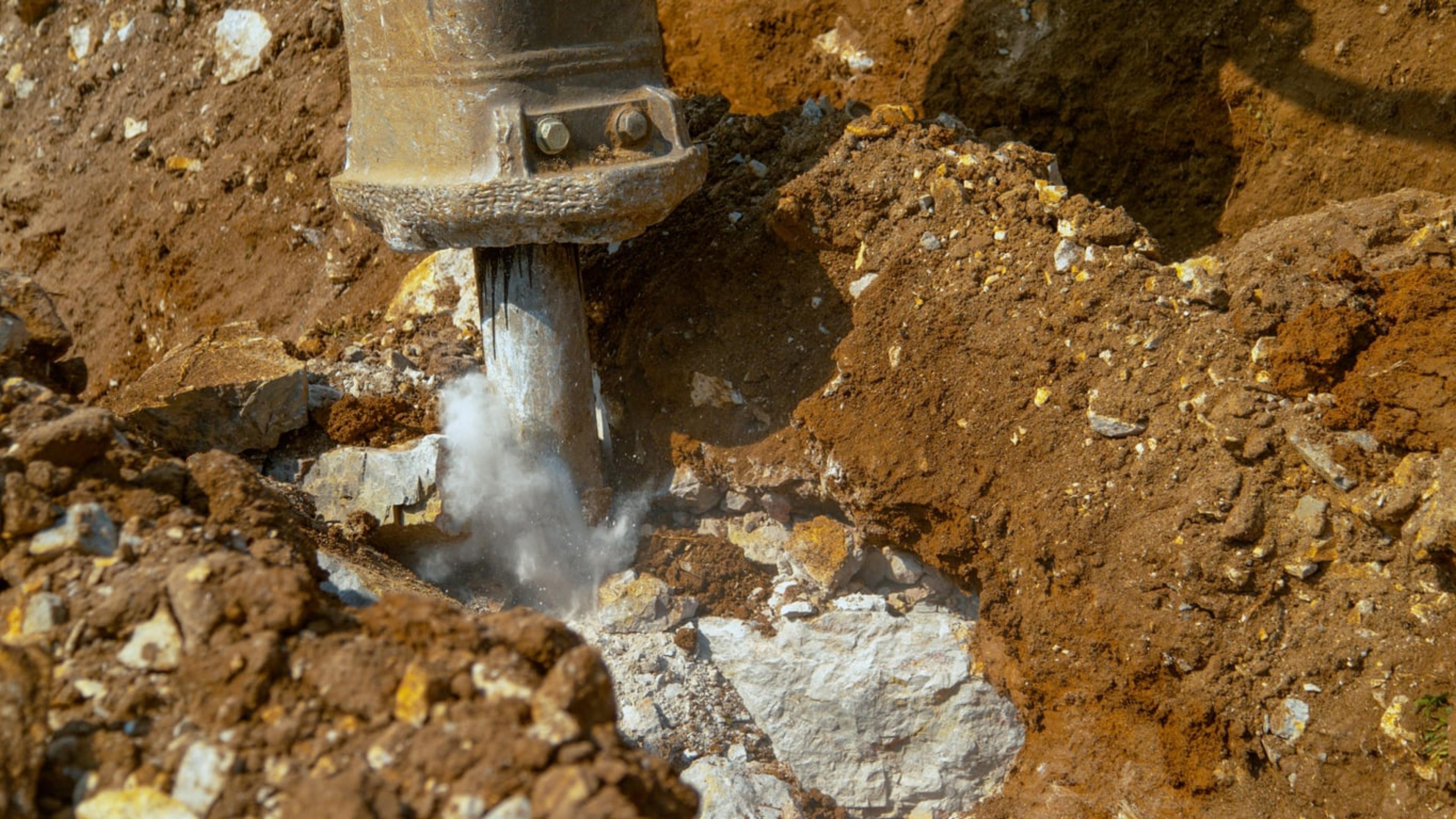
It is difficult to predict underground conditions without excavation. Screw piles are effective in soil, gravel, and clay, but large rocks pose a challenge. Encountering a large rock may require its removal or relocating the screw piles, which increases project costs and time. Fortunately, Postech's advanced equipment and expert team can handle such situations efficiently.
Installation under an existing structure
Shoring up existing buildings
A common application of screw piles is to reinforce existing buildings. This often involves maneuvering under the structure. Using an excavator to install screw piles can also facilitate digging under the building, saving time and money for customers.
Positioning Under a Building Beam
When installing screw piles under a building already close to the ground, precision is crucial to avoid damaging existing structures. Proper trenching under beams with an excavator prevents potential issues, ensuring a smooth installation process.
Benefits of Using a Mini Excavator
While screw pile drivers mounted on trucks or ATVs can be used, they lack the versatility of a mini excavator. A mini excavator offers maximum flexibility, reducing risks and effectively managing installation challenges. This flexibility is one of the key reasons Postech relies on mini excavators for installations.
Conclusion
These challenges highlight the importance of using appropriate equipment and expertise in screw pile installation. Postech’s mini excavators and skilled professionals are equipped to tackle these obstacles, ensuring successful and efficient installations.